
Leaning Into Maturity
Personal Reflection

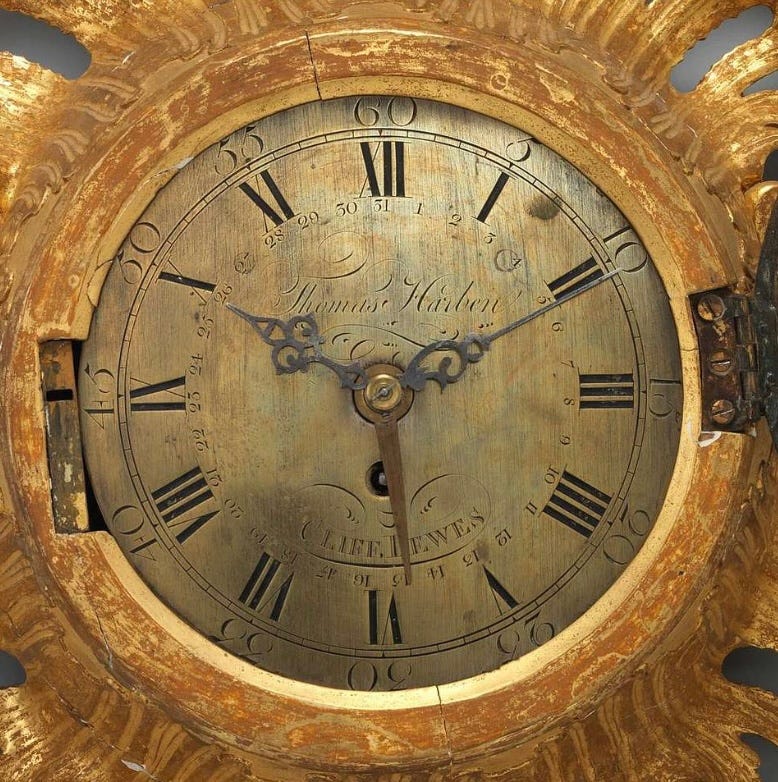
I’ve been thinking about age lately, and considering writing something about it. I saw John Watson - Horror Author’s note this morning, about the roles “older people” are given in horror movies (not the main roles!) which makes me think other people in my Substack circle think about age as well. So, I’ll share a few thoughts about age today. For this post I’ll explore some of the ways we (ourselves) respond to age as we mature, leaving aside for now the expectations imposed by society.
Back in my 20’s, I happened to have health issues, and never enjoyed the experience of youth that other people describe. Interestingly, the healthiest people seem to complain the most as they hit their mid 30’s (“now I can’t do XYZ”). It usually means, they used to do whatever they wanted (not a gift everyone gets in the first place). If you listen, the things most healthy people complain about rarely affect their daily functioning. If your body functions well enough that you can do most things you need to do - focus on that. I appreciate Eminem’s sentiment in this context, ‘I’m still twice as good as you’ll ever be’ - we can choose to work in the present.
Middle-aged (and older) people feed the social perceptions about age. I can understand the existence of social prejudice overall, but why do mature people buy into the stereotype that age is boring, and make it worse?
Around the time I turned 40, I found that I had a hard time paying attention to the conversation of people my own age. Most of the time, they seemed to be giving me their task checklist vs saying something. I understand that adults have responsibilities; but, I don’t perceive people as being more mature or practical when their conversation devolves into lists. I’ve noticed all the older people I admire care about things, and talk about their interests. If I’m not interested in a task list, or a health-problem list, why would younger people be? [I don’t mean real conversation about health, but the list of what’s wrong with you. If you’ve listened to people age 37+ you know what I mean].
Bodies change. Your body changed drastically during childhood and adolescence, and it will keep changing as you age. At any point, illness can change your body. It’s natural that we like some of the changes and don’t like others. But, we seem to emphasize change itself as negative, when it’s related to age, and don’t acknowledge that anything positive might be happening.
After I turned 40, I noticed that I don’t remember names as well as I did before. I used to have an almost instant recall for names, and now I don’t. It doesn’t mean I’m forgetting everything, or that memory loss is inevitable after 40. (It’s not - if a person at any age below 90 seems to be forgetting “episodes” - recent events or conversations - get it checked, that’s not expected aging].
At the same time that I don’t hold onto names as well as I did, I can now immediately distill the gist of what I hear (or read). It’s not a skill I had in the same way before. It makes me think, my brain is prioritizing summary and meaning over detail. I’m no longer certain that I actually forget names, it feels more like I’m paying attention to the main idea, and that’s where my focus has shifted. Further, I’ve wondered whether, around age 40, the brain starts to deemphasize rote memorizing, because it’s been years since most of us learned a new language or memorized things. Why do we expect to remember things that we don’t review or practice? My grandmother memorized an enormous amount of poetry during her life, and when she forgot something, she didn’t blame age, she reviewed it. I’ve been a slacker when it comes to memorization, for a long while now, and I need to work on that.
By contributing to the narrow view of maturity, we miss some of the really interesting challenges, and dramatic storylines, that arise after mid-life. I’ll give you one example: given what’s fashionable in the media, you’d think menopause is the only thing that happens to middle-aged women. With respect to men, we don’t often hear about the experience of men, when their sons (or children) overtake them physically around mid-life. It happens around the same time that we know more, and generally can do our jobs more effectively than before - if we’re lucky, we’re decades away from retirement that’s based on inability to work. It’s an interesting dichotomy. Along those lines, I’ve had the idea for a fantasy story, for a while now, with my main character being a solidly middle-aged man. Not like Aragorn, who is extra long-lived and in his prime. My main character would know more than the young guys around him, but he’d have to negotiate people’s perception of strength, because he wouldn’t be as powerful, or fast, in the physical sense.
Fortunately for me, the people in my real life don’t read my Substack, so they won’t be offended that I’ve described their conversation as task lists and health-problem lists. The people in my Substack circle, regardless of age, are interested in different subjects - and care about their writing among other things! That distinction itself will affect how you experience your age, more than other factors society might emphasize.
Until next time.
My newsletter is a mix of short fiction (speculative and slice of life), creative non-fiction, and occasional poetry. If you’re interested, I hope you will subscribe. Thank you for reading!
I recently met up with a friend in her mid 40s and health wise, she is absolutely fine but is always complaining about her aches and pains now that she's "so old." I keep telling her to stop thinking like that about herself because she's making it worse. Like you said, I think she's buying into this and it's so disheartening coming from someone who is perfectly healthy:
"Middle-aged (and older) people feed the social perceptions about age. I can understand the existence of social prejudice overall, but why do mature people buy into the stereotype that age is boring, and make it worse?"
On the other hand, my mother has always said menopause was the best thing to ever happen to her!
It's also interesting how women are more inclined to talk about getting older like its a bad thing. The men I know tend to joke about it more or accept it, whereas the women I know will internalise it as something really negative and add it to the list of things that make them feel badly about themselves.